Solitaire - Classic Card Game
- 4.7
- Rating
- 10.00M
- Installs
- Free
- Price
 Analysis by App-foxy
I approached Solitaire - Classic Card Game expecting a familiar card game I could open for a few quiet minutes, and that is exactly where it makes the most sense. It is a free solitaire game from Playvalve, available for players rated Everyone, with a straightforward focus on arranging cards rather than learning a complicated ruleset. After spending time with it, I found the appeal less about novelty and more about how easily it fits into small gaps in the day.
The basic idea is instantly recognizable: build and clear the tableau while making careful decisions about which cards to uncover and which moves to delay. That simplicity is useful, but it also means the game lives or dies by presentation, pacing, and how comfortable it feels during repeated sessions. In my experience, this version works best as a low-pressure companion for a commute, a short break, or a few minutes before bed.
What playing it actually feels like
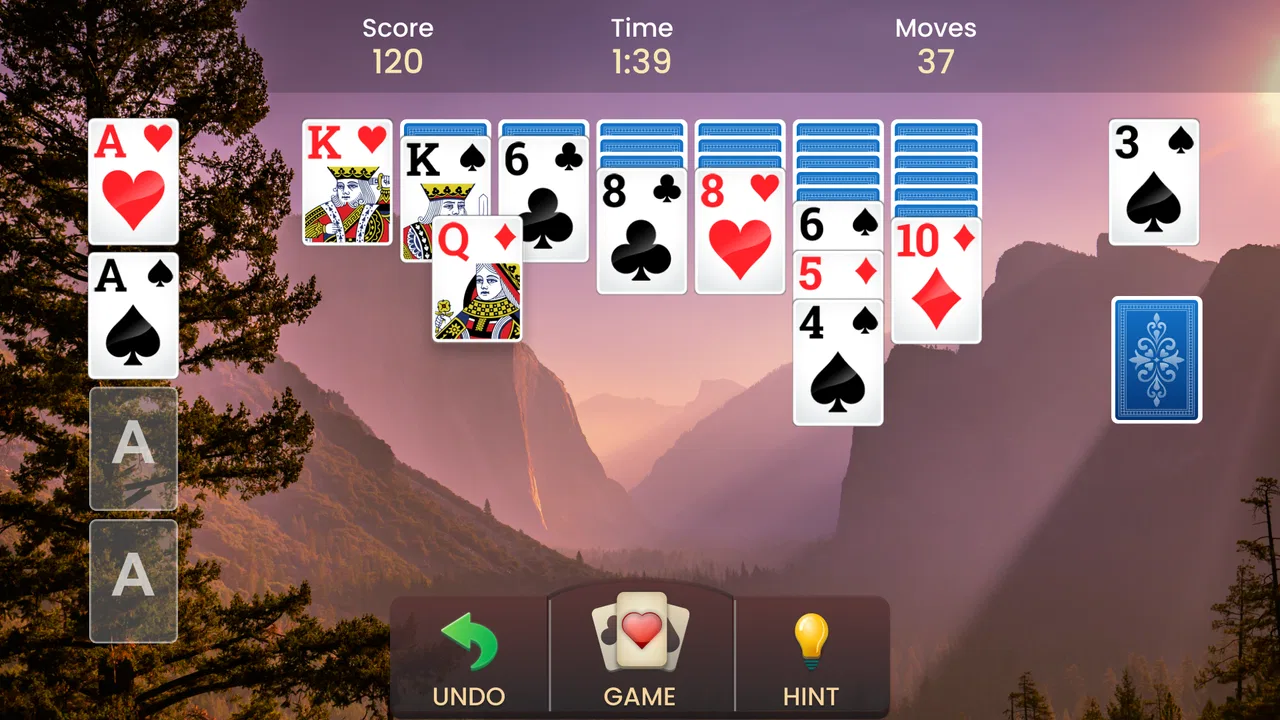
The first thing I noticed is how little preparation the game demands. There is no long tutorial to work through before reaching the cards, and the familiar structure means most players can begin immediately. That makes it approachable for someone who has not played solitaire recently, while still giving experienced players the small satisfaction of spotting a better sequence of moves.
You May Also Like

 Blood Strike: 2.5 Anniversary
Blood Strike’s Loadouts Turn Every Drop Into a Tactical Gamble
A close look at Blood Strike’s custom loadouts: how fast access to signature weapons reshapes its battle royale rhythm, rewards preparation, and narrows the gap between fights.

 Pandora - Music & Podcasts
Pandora’s Music Is Easy to Start, but Harder to Recover
Pandora’s strength is its low-effort path from a seed to a station. Its weak spot is how much confidence it asks you to place in connection, setup, and quiet recovery.

 8 Ball Pool
 Is Built on Rivalries, Rematches, and Routine
A close look at the rivalries, rematches, shared routines, and unanswered safety questions that turn a quick pool match into a persistent mobile community.

 Samsung Music
’s Quiet Strength Is Playing What You Already Own
Its reach comes less from spectacle than from dependable access to a personal library. That simplicity is both the app’s strongest retention engine and its ceiling.

 AccuWeather: Weather Radar
AccuWeather Review: A Quick, Clear Forecast for Everyday Decisions
For everyday plans, the best forecast is the one you can understand quickly. AccuWeather makes rain timing, radar, and local conditions easy to act on, with a few trade-offs.

 Hill Climb Racing
Why Hill Climb Racing Still Turns Crashes Into One More Run
A tiny car, a bumpy hill and one more upgrade: Hill Climb Racing keeps resurfacing because its simple chaos makes every near-miss feel personal.
More From Our News Desk
View All News


Solitaire is relaxing when I treat each deal as a short mental exercise rather than a challenge I must conquer. The game encourages me to scan the tableau, consider hidden cards, and avoid using an available move simply because it is available. That last point matters: a quick move can sometimes remove flexibility later, so the most enjoyable sessions reward patience more than speed.
The brain-training angle should be understood in a modest, practical way. I would not use this as a replacement for a structured learning tool, but it does ask for attention, visual sorting, short-term planning, and a little risk assessment. When I play while distracted, I make more mistakes. When I slow down, I notice patterns and preserve more options. That makes it a pleasant way to keep my mind occupied without demanding the intensity of a strategy game.
Its reach is considerable, with over 10 million installs and a 4.7 average from around 341 thousand ratings. Those figures suggest that the format has connected with a broad audience, but they do not change the personal question that matters most: whether this particular presentation feels comfortable enough for you to keep returning to it.
A practical routine for short sessions
I found a simple routine more satisfying than trying to play continuously. I open a deal when I have a few uninterrupted minutes, first look for moves that reveal a covered card, and then pause before committing to a move that closes off a column. This approach prevents the game from becoming mindless tapping and gives even a brief session a clear purpose.
Another useful habit is to avoid rushing toward an empty space. An open column can be valuable, but placing a king there too early may not be the best choice if another sequence could eventually expose more cards. The game is at its most interesting when I treat empty spaces as tools rather than automatic rewards. That small change in mindset makes the familiar format feel more thoughtful.
For someone playing during a work break, I would recommend stopping after a completed deal or a natural point of frustration instead of endlessly retrying. Solitaire can be calming, but repeated failed attempts can turn the same quiet activity into a source of irritation. The option to simply close the game and return later is part of its strength.
Free to start, with spending worth considering
The game is free to download and play, which makes it easy to test without committing money first. There are in-app purchases ranging from $2.49 to $11.99 per item. That is the main spending context I would keep in mind before settling into regular play: the free entry point is clear, while optional purchases create a separate decision for people who want to spend.
I would not buy anything immediately. I would first use the game through several ordinary sessions and decide whether the interface, pace, and available play experience genuinely suit me. A purchase only makes sense if it removes a specific annoyance or adds something I personally value. Paying simply because a prompt appears is not a good reason, especially in a game whose central activity is intentionally simple.
There is also a useful distinction between convenience and competitive advantage. In a solo card game, spending is less concerning than it would be in a multiplayer title where purchases might affect other players. Even so, I prefer to make the choice deliberately. If you are handing the device to a child, the Everyone rating makes the content broadly accessible, but I would still use the device’s purchase controls so that free play remains genuinely free in practice.
The purchase range is easy to understand, but the value depends on what each item offers at the moment you see it. I would read the purchase screen carefully rather than assuming that a paid option is necessary for normal play. The safest approach is to treat every optional purchase as exactly that: optional, and something to evaluate against how often you use the game.
Progress without a heavy pressure loop
One reason classic solitaire remains attractive is that it does not require a large commitment. I can play one deal, put the phone down, and return later without feeling that I have fallen behind a group or missed a timed event. That makes this version a better fit for people who want a self-contained pastime rather than a game that constantly asks for attention.
At the same time, the absence of a demanding progression structure can be a limitation. If you need campaigns, character development, deep unlock trees, or a strong sense of long-term achievement, this is unlikely to satisfy you for long. Its reward is the act of solving the layout, not a dramatic journey built around the cards.
There can still be pressure, but it mostly comes from the player. I sometimes create my own pressure by trying to finish quickly or by replaying a difficult deal too many times. The best way to keep the experience relaxing is to set a small boundary: one or two rounds during a break, then stop. That keeps the game useful as a reset instead of allowing it to consume more time than intended.
Fairness in a solo card game
Fairness feels different here because the main opponent is the layout and my own decisions. I am not competing against another person who might have paid for an advantage, so the usual concerns about unequal multiplayer progression are not central to the experience. For me, the important fairness question is whether the game lets me enjoy the core card activity without making spending feel compulsory.
My recommendation is to judge the free experience first. If I can play comfortably without purchasing anything, then the game is doing what I need from a casual solitaire title. If optional spending becomes the only way to remove repeated friction, I would reconsider whether this is the right version for me rather than assuming I must pay to continue.
This is also why I would not compare it directly with competitive card games. A multiplayer collectible card game may need constant balance updates, matchmaking, and careful control of paid advantages. This solitaire game has a much narrower purpose. Its fairness is mainly about transparent choice and a comfortable solo loop, not about maintaining an even contest between human players.
How it compares with other solitaire choices
Compared with a physical deck, the app is much more convenient. I do not need a table, space to lay out cards, or time to gather everything after a round. The trade-off is that the experience depends on the phone and its interface, so people who enjoy the tactile feel of moving real cards may find a traditional deck more satisfying.
Compared with a broader collection of card games, this title is more focused. A multi-game app can offer variety when solitaire starts to feel repetitive, while this one is easier to understand because it does not ask me to switch between several rule sets. I would choose this game for a dependable single activity and a larger card collection for variety.
Compared with puzzle games built around levels, solitaire offers less structured escalation. A level-based puzzle may give clearer goals and a stronger feeling of progression, but it can also demand more concentration. This game is better for a relaxed mental pause, especially when I want to stop at any moment without losing the thread of a story or challenge.
Players who care about social competition should look elsewhere. The appeal here is private concentration and repeatable card play. Likewise, anyone seeking a rich strategy system may outgrow it. The game is at its best when you want familiar rules, a low barrier to entry, and a session that can be as short as your schedule allows.
Details I would check before making it a daily habit
The current version is 2.6.0, and the game supports devices running Android 7.0 or later. That makes it accessible to many older Android phones, although the practical experience will still depend on the device’s screen, responsiveness, and available space. On a smaller display, card readability matters more than it would in a game with fewer visual elements, so I would test it on the phone I actually plan to use.
I would also pay attention to how the game fits my personal tolerance for repetition. Solitaire can be wonderfully steady, but that same steadiness may feel limited after several rounds. If I notice myself tapping automatically rather than making decisions, I take that as a sign to switch activities rather than expecting the game to provide a new kind of excitement.
Another point is attention. Although a round can be casual, careless moves can make a deal harder than necessary. I would not recommend playing while walking, driving, or handling another task that requires focus. The game is simple, but it still benefits from looking at the layout properly, especially when deciding which card to move first.
I also prefer to keep notifications and purchase decisions separate from the actual play session. When I open a game for a short break, I want to know whether I am there to play or to browse optional extras. Treating those as separate choices makes the experience feel more controlled and helps prevent small, unplanned spending.
Who should try it, and who should skip it
I would recommend this solitaire game to someone who wants a familiar card pastime with almost no learning curve. It suits commuters, people taking short breaks, casual players returning to solitaire after years away, and anyone who enjoys quiet pattern recognition more than fast action. It is also a reasonable choice for a shared household device because its content rating is Everyone.
I would be more cautious about recommending it to players who need a strong sense of progression or an active community. The game’s appeal comes from repetition refined by small decisions, not from a large world, story, or competitive ladder. If you already know that you lose interest in repeated solitaire layouts quickly, a broader card app may be a better use of your storage and time.
I would also skip optional purchases until the free experience has earned that consideration. The game costs nothing to start, but the presence of items priced from $2.49 to $11.99 means it is worth keeping spending intentional. For me, the right test is simple: play normally, identify a specific benefit, and only then decide whether that benefit is worth paying for.
My trust verdict after using it
What I trust most about this game is the clarity of its purpose. It does not need a complicated explanation to justify a place on my phone: it gives me a familiar solo card activity whenever I want a quiet diversion. Playvalve has kept the concept focused enough that I can understand the value within a few minutes of opening it.
My reservations are equally straightforward. A classic solitaire format can become repetitive, and free games with optional purchases deserve a little attention before becoming part of a daily routine. I would not describe either point as a deal-breaker, but they are reasons to use the game on your own terms rather than automatically treating it as a permanent habit.
The title was released on February 16, 2021, and its continued presence alongside a large install base shows that the format still has staying power. That does not guarantee that every player will enjoy it, but it supports my view that this is a dependable casual option rather than a game built around a short-lived gimmick.
My final judgment is positive, with a clear condition: choose it for calm, familiar solitaire sessions, not for deep progression or social competition. I would install it for a spare-minute routine, play without rushing into purchases, and keep expectations aligned with what the game does best. If that sounds like the kind of small, focused break you want, this is an easy free game to try.
FAQs for Solitaire - Classic Card Game
01What are the main features of Solitaire - Classic Card Game?
Solitaire - Classic Card Game offers a traditional card gaming experience with a modern twist. Key features include customizable card themes, daily challenges, and an intuitive interface. Players can enjoy unlimited undo options and hints, making it accessible for both beginners and seasoned players. The game also tracks your performance stats to help you improve.
02Is Solitaire - Classic Card Game free to play?
Yes, Solitaire - Classic Card Game is free to play. However, it includes in-app purchases to enhance the gaming experience, such as ad removal and additional themes. While the core gameplay remains free, these optional purchases are available for users who wish to customize their experience further.
03Does Solitaire - Classic Card Game require an internet connection?
No, Solitaire - Classic Card Game can be played offline without an internet connection. This allows users to enjoy the game anytime and anywhere, perfect for travel or areas with limited connectivity. However, some features, like daily challenges, may require a connection to update content.
04How can I customize my game experience in Solitaire - Classic Card Game?
Customization is a significant aspect of Solitaire - Classic Card Game. Players can select from various card designs, backgrounds, and themes to personalize their experience. The game also allows you to adjust settings like sound effects and animations, ensuring a tailored gaming environment to suit your preferences.
05Is Solitaire - Classic Card Game suitable for all ages?
Yes, Solitaire - Classic Card Game is suitable for all ages. Its simple rules and engaging gameplay make it accessible to younger players while providing a nostalgic experience for adults. The app offers adjustable difficulty levels, allowing everyone from beginners to experts to enjoy the game at their own pace.
Pros
- Simple
- intuitive interface enhances user experience.
- Offline mode available for uninterrupted play.
- Multiple themes to customize card decks.
- Daily challenges keep gameplay engaging.
- Lightweight app
- quick installation.
Cons
- Ads can be intrusive during gameplay.
- Limited multiplayer options available.
- No cloud save for progress tracking.
- Lacks advanced statistics features.
- Occasional minor bugs in animations.

Solitaire - Classic Card Game
Gallery